During the years 1996 to 2000 when I was running an intensive home based educational and therapeutic programme for my autistic son Aadil with the help of the Oxfordshire Local Education Authority and Social Services , I had the unique opportunity of meeting and attending lectures and workshops given by a number of high profile autistic individuals in addition to reading their autobiographies. Three individuals profoundly inspired and influenced me and so on the occasion of the seventh World Autism Awareness Day on 2nd April, 2014, I should like to share with others what I have learned from them.

Dr. Temple Grandin
Dr.Temple Grandin, a professor of animal sciences at Colorado State University and bestselling author of “Emergence-Labelled Autistic”, “Thinking in Pictures”, “The Way I See It:A Personal Look at Autism and Aspergers” at one such conference organized by Future Horizons described how due to auditory hypersensitivity the sound of a school bell was so painful to her she likened this to the pain one would experience if a dentist drilled a tooth without the use of a local anaesthetic. Her mother Eustacia Cutler at the same conference discussed Temple’s upbringing. With steadfast determination to help Temple she had the foresight to provide a structured routine at home with the help of a nanny. Gradually the non-communicative child with disruptive behaviour settled and over the years her academic pursuits were monitored and nurtured by one of her high school teachers. During her formative years while on holiday at her aunt’s farm Temple observed the calming effect of pressure on cattle when they were led through an animal chute .She went on to apply her observations on cattle in designing a pressure machine which helped to calm herself whenever she felt anxious. Eventually this led to the development of weighted vests which are still commercially available to calm hyperactive children .Temple also suffers from tactile sensitivity. She cannot tolerate the sensation of tags and seams against her skin and so she prefers to wear her under garments inside out. On a personal note I shall remain indebted to Temple for she most emphatically encouraged me to work on Aadil’s strengths and interests rather than just focus on his weaknesses.
Donna Williams the author of “Nobody, Nowhere”,”Somebody Somewhere”, and “Like Colour to the Blind”, a series of autobiographical accounts spoke at length at a meeting of the Berkshire Autistic Society about how any lapse in her gluten(wheat) and casein(milk) free diet or failure to take her daily mineral supplement would inevitably lead to drastic adverse effects on her behaviour.

Donna Williams
At another lecture organized by the Oxfordshire Autistic Society Donna explained why like so many other autistic children and adults she from time to time taps the walls with her fingers. For the same reason, namely, visual perception problems where in this case, flat surfaces appear undulating ,some autistic children feel more secure walking on their toes .(Hence doctors or therapists who, at the request of parents, feel they can rectify the odd stance and gait of a child that walks on tiptoes either by severing tendons of the feet or by painful manipulation are making a grave mistake of depriving the child of an essential coping mechanism. I am aware of cases where these measures have actually been performed) .Through her lectures and autobiography Donna has shared with us the consequences of sensory processing problems. She can sense a discomfort in her lower abdomen (due to a full bladder) but not work out that going to the bathroom to pass urine would give immediate relief . She employed a visual support viz. a fluorescent yellow tape secured to the floor leading from her bed to the bathroom to remind herself where to go if she experiences the same sensation in the middle of the night. So when doctors are approached by anxious parents regarding their child’s delay in mastering toilet skills, urinary frequency or incontinence they should not automatically assume that an infection or an anatomical anomaly is the root cause of this problem. Likewise, disturbances in bowel pattern is all too common in autistic children in particular holding back leading to severe constipation or passing frequent but small quantity of stools. Another example of processing problems in Donna’s case : she describes what excruciating discomfort she has to tolerate due to intense hunger pangs but she cannot figure out that if she ate some food the sensation would abate.
Donna has also elucidated her difficulty in dealing with “multichannel‘’ stimuli,i.e.processing information from different sensory modes simultaneously. Like many other autistic people she is “monochannel”, preferring one sensory mode over another. This explains why the majority of autistic children and adults are “visual learners” i.e. they process information more readily with visual cues. Hence a doctor advising the parents of an autistic child “Speak continuously with your child” or parents and teachers who continuously bombard the child with questions and commands will probably do no favour to the child if he or she is a visual learner. Such a child will probably do better by the parent uttering a keyword accompanied by a picture of e.g. where the child is going or what the child is going to do.
In contrast to the visual learners there are a few autistic individuals who are auditory learners who process sounds more readily than signs and symbols. One such person is Tito Mukhopadhyay, a Bengali poet and writer. Tito, who is nonverbal, was raised singlehandedly by his mother Soma. Armed with an alphabet board Soma taught Tito to read and write. At the

Tito Mukhopadhyay
tender age of eleven Tito composed his first book of poems. Through his writing he takes us deep into his world of autism. He demonstrates how difficult it is for the autistic child or adult to express their emotion: his mother once purchased a shiny red tricycle for his birthday. Tito was absolutely ecstatic but his response was not appreciated by others due to the lack of any facial expression. To express his gratitude and convey his thanks he calmly arranged three toy soldiers alongside his tricycle. How was anyone to decipher his message? Any doctor, psychiatrist or psychologist could easily label such a child as being of low intelligence with poor attention and no motivation. Yet this very child has shared with us his innermost thoughts in his collection of poems entitled “The Mind Tree”. A few quotations are given here : ”Men and women are puzzled by everything I do. Doctors use different terminologies to describe me…Every move I make shows how trapped I feel…” In another poem he writes “When you are trying to think blue And end up thinking black You can sure to be frustrated Time and again it happens to me And I get quite helpless. Otherwise why should I get up and spin myself. Spinning my body Brings some sort of harmony to my thoughts. So that I can centrifuge away all the black thoughts…”
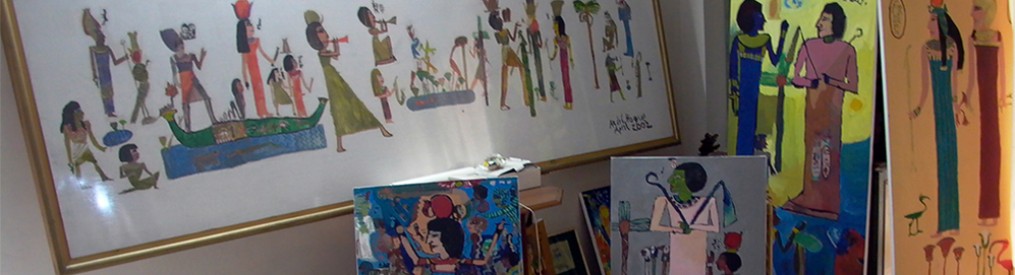
On World Autism Awareness Day I offer my gratitude and heartfelt thanks to Temple, Donna and Tito. They have directly touched my life as that of Aadil’s. Had it not been for Donna Aadil would not be on a gluten and casein free diet or on mineral supplements. Supporting his artistic endeavours certainly received a boost with Temple’s words of encouragement. I would not have been able to appreciate the magnitude of Aadil’s sensory problems had I not read the autobiographies of each of these extraordinary individuals. By allowing us into their world they have empowered us – parents and professionals-to understand and make the world a better place for our autistic children.
For further information search leedyhoque.com or contact Dr.Leedy Hoque, Director, Acceptance and Understanding Autism (AUA) advisory service cell no 01817602183 or e-mail leedyhoque@hotmail.com
 leedy hoque